Tag Archives: Buenos Aires

Saying No to Bank Fees

14 Nov

No, this isn’t related to current events in the U.S. Although, I am very happy to hear that Bank of America never went forward with their idea to charge $5 per month for using a debit card!

This is about how we get our money from the U.S. to our pockets in Buenos Aires paying zero bank fees. (These two suggestions apply just about anywhere in the world when coming from the U.S.)

This practical information is normally missing when we read other bloggers’ sites, so we thought we’d take a timeout from the photos and stories to share what we’ve learned about avoiding ATM and foreign transaction fees.

Getting Cash

If you’re not a resident of Buenos Aires, you can’t open a local bank account. So, if you want cash (you can only get pesos from the ATM) you have to withdraw it from your home checking account. Just like in the U.S., the fees for using another bank’s ATMs can add up. Right now in Buenos Aires they are about $4 per transaction.

Maggie and I don’t pay a penny in these fees, because we heeded the advice to open up a Charles Schwab brokerage account and investor checking account. You need the brokerage account in order to open the checking account, but you don’t have to use the brokerage account ever. Granted, to get money into your Schwab checking account you either have to mail in the checks or set up online transfers. We set up online transfers from our Bank of America checking account.

Once you have your Schwab account, use the debit card for cash withdraws only. Say yes to the ATM fee and on the last day of the month Charles Schwab will pay you back all the fees you incurred throughout the month.

Just don’t use that card for purchases. Chuck charges a foreign transaction fee for retail, restaurant and most other vendor purchases outside of the U.S., which leads us to the second suggestion.

Using Credit

We unknowingly signed up for an amazing credit card when we were married. At first, it was to help us earn points we could use to redeem for a flight. That turned out to be pretty amazing.

Since then, we’ve learned that with this credit card we don’t get charged foreign transaction fees. We didn’t even know such a thing existed, but it helps us keep what little money we have in our hands and not in the bank’s. Our credit card is no longer offered or I’d say get it. Just remember that your credit card matters. Only sign up for one that has no foreign transaction fees. You’ll thank me later.

Follow these two suggestions and you’ll save a decent chunk of change overtime. For us, if we’re going to make it in Buenos Aires, we need every bit of help we can get. This is one way we’re trying to keep money in our pockets.

**We owe a big “thank you” to all the helpful and knowledgeable expatriates at www.baexpats.com who have helped us figure this all out.**

An Afternoon with Evita in Recoleta

11 Nov

Church of Nuestra Señora del Pilar

Sadly, we didn’t know too much about Argentina before arriving here. If we had to spout off a few words related to the country we probably would have only come up with “tango,” “beef,” “South America,” and “Evita.” Or we’d just sing the line, “Don’t cry for me Argentina!” We’ve learned a bit more during our first month, but Evita would still top the charts, so we decided we ought to pay her a visit.

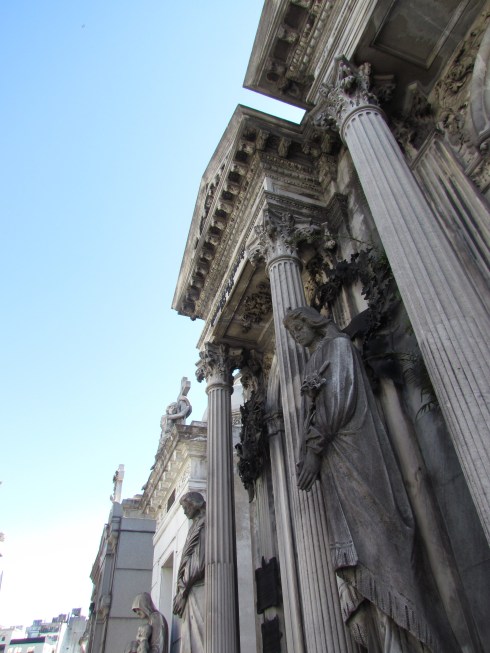
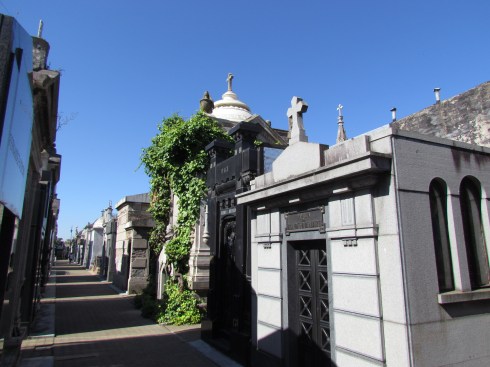
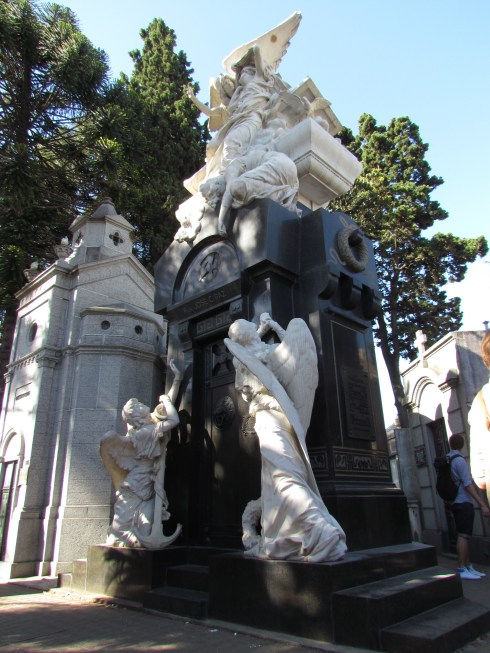
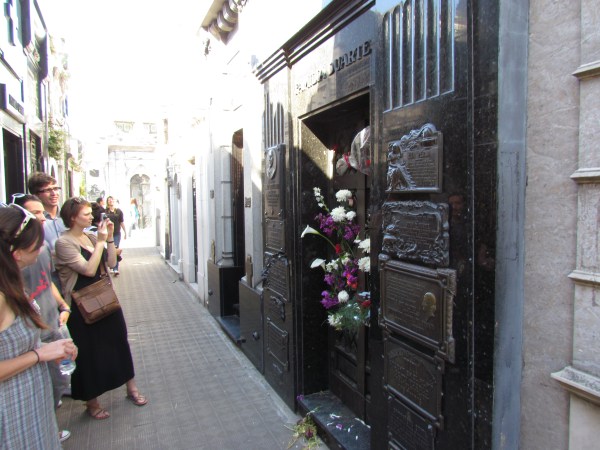
In the heart of the Recoleta neighborhood sits one of the top tourist attractions in Buenos Aires: the Recoleta Cemetery. Within it lies María Eva Duarte de Perón, or “Evita.”

The inconspicuous tomb of Eva Perón

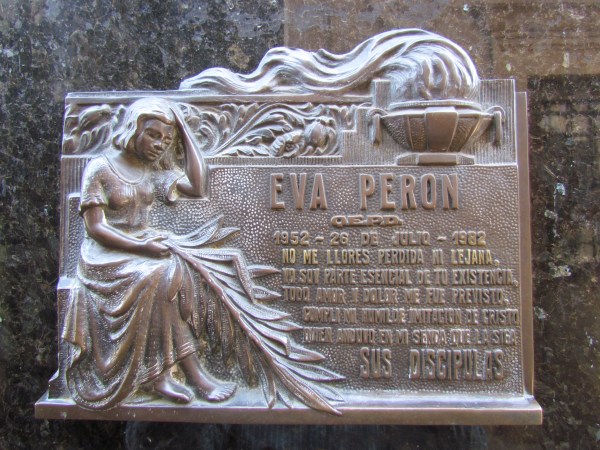
A plaque from "her followers" that reads, "Don't cry for me, lost and distant, I'm an essential part of your existence. All my love and pain were my destiny, I assumed my humble responsibility of living like Christ. May whoever followed my path continue in that endeavor."

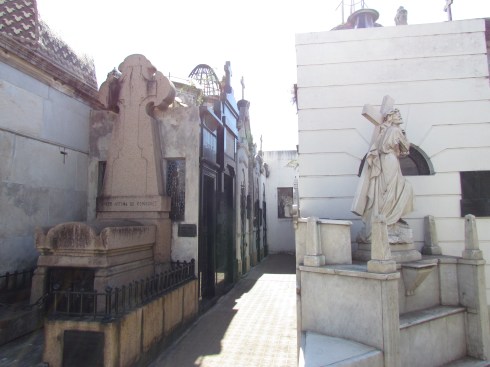
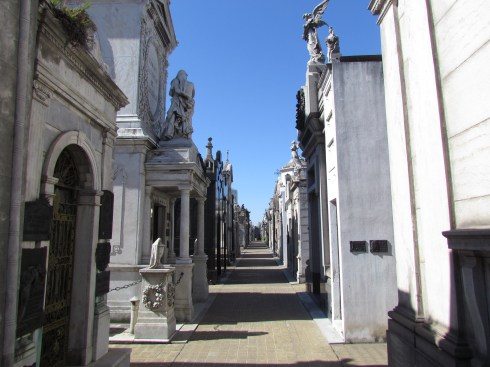
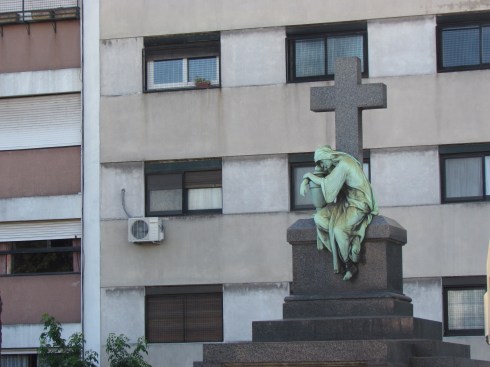
Evita’s tomb may be the original lure for visiting the cemetery, but the rest of the cemetery steals the show.

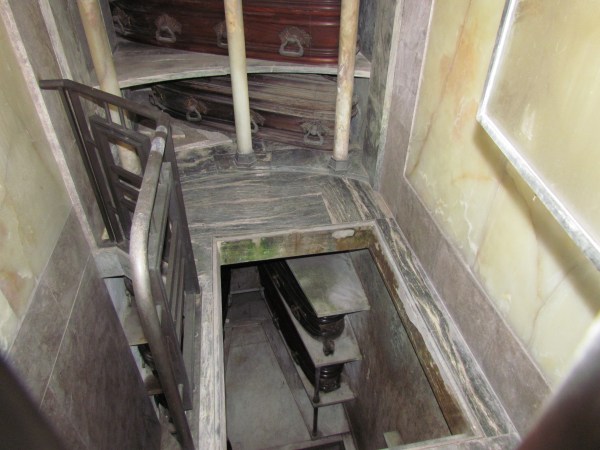
We were able to peak into one of the tombs (below). They’re dug about 6-10 feet deep. One of the guys we were hanging out with commented that the tombs were very much like the apartments in the city. All the people are packed in tight, only that the dead didn’t rooms for sleeping or cooking or cleaning up.

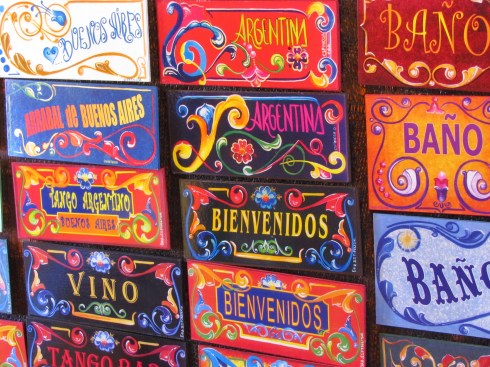
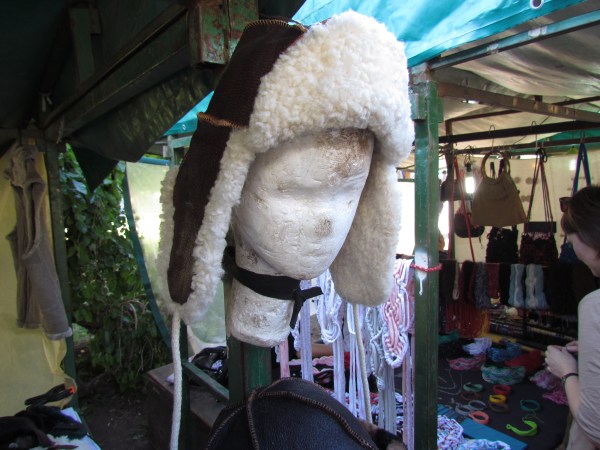
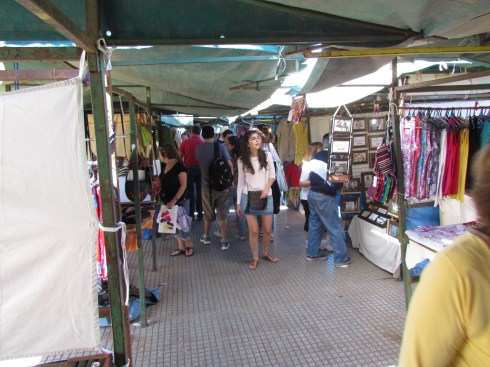
After strolling among the dead and tourists in the Recoleta Cemetery, we headed to the market just outside in Plaza Francia. They have everything from artisan jewelry and crafts, leather wallets, belts and bags, and your miscellaneous nick-knacks for tourists.

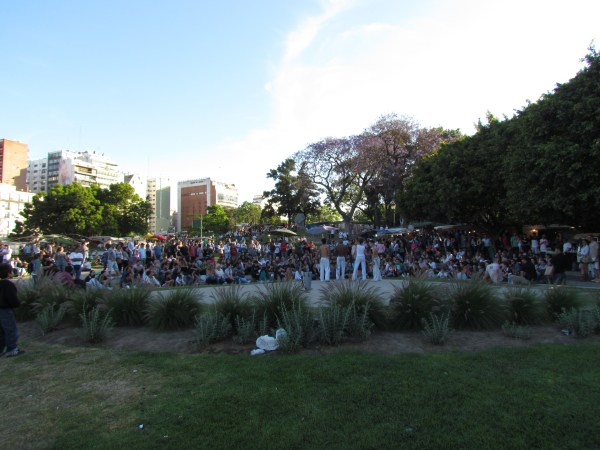
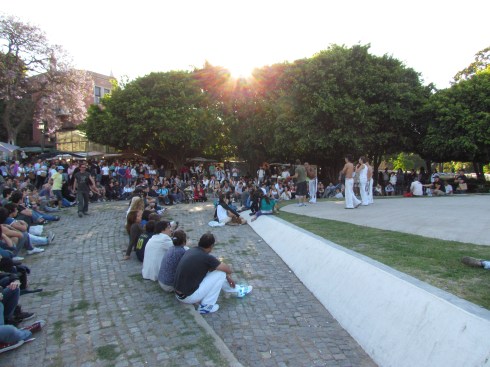
Then before the sun started to put an end to the day, with our new friends (we regret not taking pictures with them) we joined the locals in the park who were drinking their mate, listening to live music, and watching the entertainers.

Not a bad way to spend a beautiful Sunday afternoon in Buenos Aires! And it didn’t hurt the wallet one bit. Everything was free, except, of course, the street vendor’s coffee.

Hey Tigre, I’m Looking at You

6 Nov

Located about 17 miles outside of the city center, Tigre is a perfect weekend day-trip for city dwellers. Don’t expect to escape the hoards of people, but do expect to see trees, sky, water. That’s exactly what Maggie and I wanted, so this past weekend we went with a group of other students from Verbum Spanish School to visit Tigre.

The journey for us started at the Retiro train station in the city. For an Argentine $5 (that’s about U.S. $1.17) we got two round-trip tickets.

Retiro train station in Buenos Aires

Our group lined up for the train.

What’s great about Tigre is that it’s located right in a river delta, so there are numerous canals to explore. But, the only way to explore them is by boat. You can ride in a “lancha colectiva,” a public water bus that has routes throughout the delta.

"Lancha colectiva" - Public transportation 'bus' on the river.

If you know someone or happen to have one these handy, you could skip along in one of the little guys. We saw a handful docked along the river bank.

You could also row your way around. I guess that’s the water equivalent to a bicycle. Maybe conservationists prefer this way of traveling, but they get stuck breathing in the fumes from the boats.

We didn’t ride any of those this time. With our group we took one of those site-seeing boats that wanders up and down the canals for an hour for about $12 each (AR $50). I get seasick really quickly, so I was a bit worried to be on any boat without Dramamine, but the crew said if worse comes to worse I should use the toilet and not the river to “heal” myself.

I made it the entire hour without getting seasick.

Here are some of the sights from our journey through the canals of Tigre’s river delta.


After the boat ride we followed the crowds to a large outdoor market. Food was on our mind, not shopping, so we sat down at an outdoor restaurant to have some pork. I ordered the “sandwich de bife de chorizo” and Maggie had the “choripan.” The chimichurri sauce we spread on top was amazing.

Sandwich de bife de chorizo.

Choripan, a sausage link on a white bread bun.

In all, we had a wonderful time in Tigre. Next time we go, I’m hoping to spend some time on the grassy river bank with a book and a beer.

Culture Shock

23 Oct

I expected to experience culture shock within the first few weeks in Buenos Aires, but I never imagined it would be so literal.

Turns out that my MacPro Book laptop computer, with its aluminum body, is an excellent conductor of electricity. Whenever I plug in to an outlet I receive a gentle, tingly, persistent wave of electrical charge to my hand and wrist. The only way to maneuver free from shock was to use the laptop after it had been charged.

Of course, this posed a serious problem considering all of our income is generated from my work building websites. I had to find a solution.

Disorientation Stage

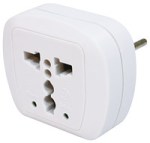
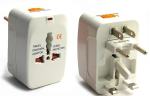
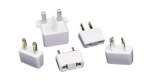
The MacBook Pro can manage voltages between 100-240. (The U.S. uses 110 volts. Argentina uses 220 volts.) All you need is a plug adapter. At first, I thought a simple fix to my problem would be to switch out the adapter. Tried one. Tzzt. Tried another. Tzzt. I tried every combination I had. Nothing stopped the shock treatment.

Hoping the problem was with the plugs in my apartment, I set out to test it at coffee shops. Tzzt. Tzzt. I changed the adapters again. Tzzt. Tzzt.

Seeking some counsel, I stopped into an electrical shop just around the corner. These guys reminded me of the playful brothers on Car Talk. After telling them my problem, instead of immediately giving their opinion, they guessed where I was from. Apparently, I look both Arab and French. After settling that issue, we talked electricity again.

The main guy told me that the problem wasn’t my computer but the electrical outlets and wiring. In Buenos Aires, because so many of the buildings are decades old, they don’t have proper ground wires. So, he told me, the problem was everywhere. I’ll have it just about most places.

How is that possible in a city similar in population to Los Angeles and Rio de Janeiro?

Hostility Stage

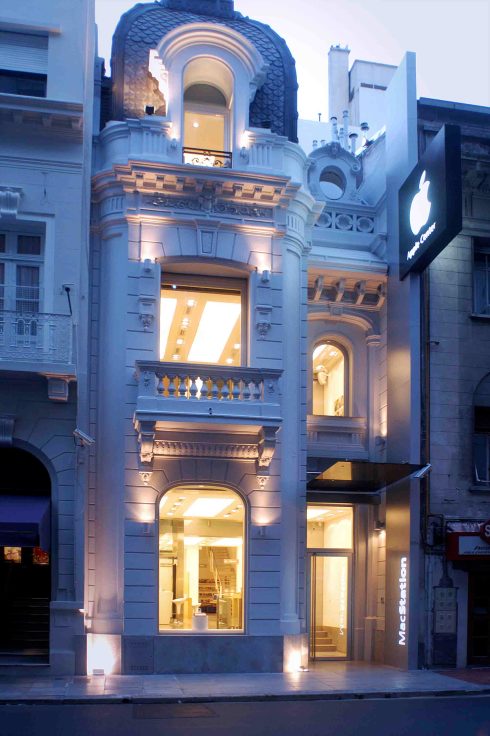
If anyone had an answer, it would be Mac Station — Buenos Aires’ main Apple retailer.

There was certainly no way that everyone who owns an aluminum-cased Mac in the city just put up with this.

“I get shocked when it’s plugged in,” I told the kid, who fit the I-work-in-an-Apple-store role perfectly.

“Yeah, that happens. But this might help you.” He handed me an adapter that fits directly into the Mac battery pack.

He thought that replacing my U.S. three-prong plug with a local plug would help with the electrical conversion. I was desperate, so I bought it thinking the problem would solved. He seemed sure.

I plugged in at a restaurant with my new cord. Tzzt. Tzzt.

Immediately, I returned to Mac Station to tell the kid his solution didn’t work. We talked with tech support in the store and they said there wasn’t anything I could do, except — get this — attach a wire to my computer and run to the ground.

After navigating a bus system I still don’t fully understand, dishing out cash on a cord that didn’t work, and doing it all with broken and limited Spanish, this was all he could come up with?!

Despair Stage

I began to give up about the whole situation. Maybe this won’t work out.

Without much hope, I saw another electronics store. The attendant stood at the door ready to lock it up. He was closing… at 1:30 in the afternoon! Why not? The coffee shop I was hoping to work from had not even opened yet for the day.

The Eeyore in me started to come out. Maybe I just needed to get used to the idea that nothing is going to work the way I need it to. Coffee shops won’t be open, my computer will consistently electrocute me, and stores will sell me products that don’t help and can’t be returned.

Acceptance (or Autonomy or Integration) Stage, but Better

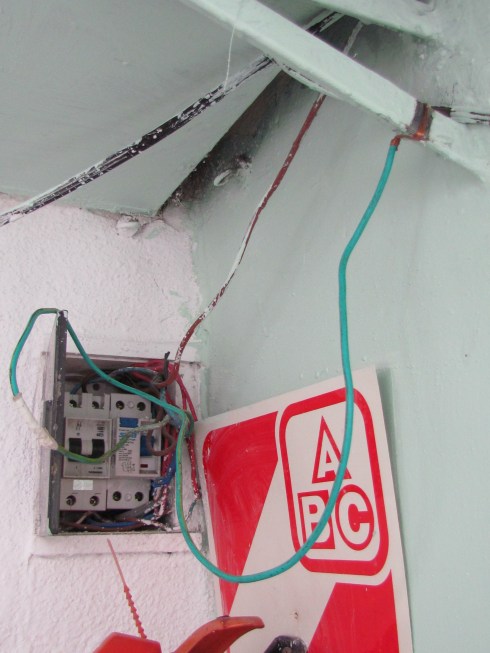
A day after my running around the city, I came home midday to find our landlord, Graciela, and an electrician working in our apartment. Graciela had him come out to install ground wires. Problem solved! Holmes on Homes wouldn’t be happy with the work, but I am.

The new ground wire

The kindness of a sweet person to help me out and this simple wire wrapped around a metal frame were all that it took to solve my electrical woes. I can now work from home, at least, without worry.

With this electrical fix, some rearranging of the furniture, and my own coffee supplies, I am quite content.

Now, if only the other challenges to my new life in Buenos Aires could work themselves out so nicely.